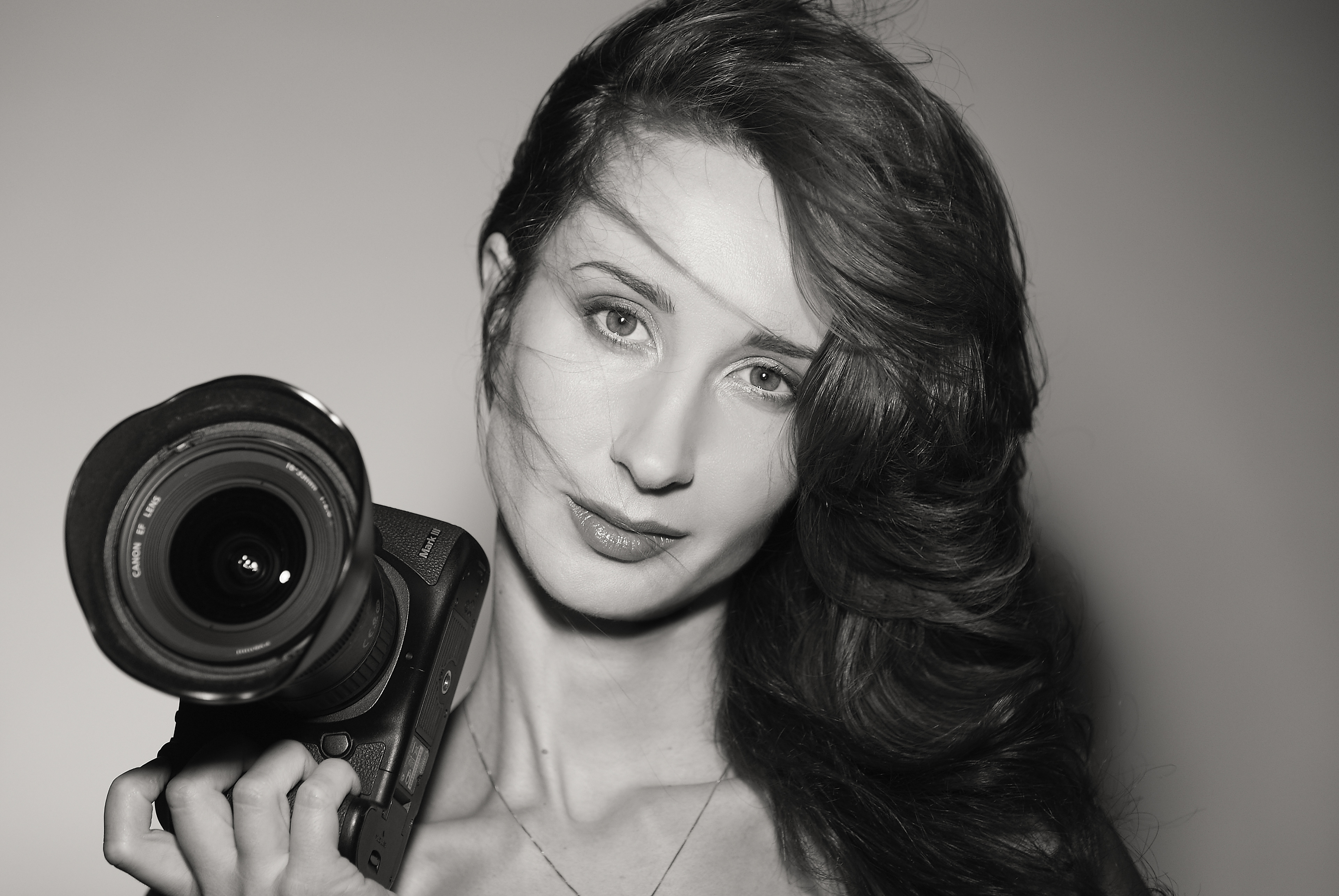
I trained as an economist and a marketing specialist. I became a photographer and an artist.
After leaving my native Kyiv, I spent years moving across Europe and Asia, pointing my lens at the world - and the world gave back beauty. My images appeared in National Geographic, the New York Times, Le Figaro, The Guardian. The subjects were those the world offers freely - landscapes, animals, faces - the classical vocabulary of the witness. What I didn't yet know was that I would one day return to those same subjects and find them utterly changed - not in themselves, but in the way I needed to see them.
Then came the two things that changed everything. A pandemic closed the world. A war opened in my homeland.
I couldn't travel, I couldn't document. Every time I raised my camera toward reality, it felt like a lie - or worse, a wound. The documentary lens had become impossible. So I did what Benigni's character does in Life is Beautiful, what del Toro does in Pan's Labyrinth: I built a parallel world. Not to escape but to survive. To keep making meaning when the available meanings had collapsed.
This wasn't a stylistic decision. It was a necessity. What began as an external gaze turned radically inward, and with it, everything changed - not just what I photographed, but how. The same subjects remained but the vibrant, concrete scenes gave way to something else: symbolic compositions that hover between abstraction and figuration, between photography and painting. I began working with dream logic, controlled blur, and the poetic weight of colour as primary tools. Ambiguity became intentional. The unresolved became the point. I stopped trying to capture the world clearly and started trying to capture how it feels from the inside. This is precisely what the modernists understood: that a landscape, a face, an animal seen from the inside becomes not a record, but a reckoning.
Dreams became my operating system — not only as subject matter but as a way of seeing. They don't belong only to the night. They filter into daily life, shaping perception, dissolving the line between memory and present, between what happened and what it meant. My photographs now come from that threshold - the place where identity unravels and reassembles, where the fantastical merges with the intimate, where a female presence moves between tenderness and unease without resolving into either.
This is not a new path. In times of rupture, artists have always turned inward: Munch and Kirchner before the First World War, Chagall and de Chirico after it, Carrington and Ernst transforming trauma into myth. I work in that lineage - using imagination not as decoration but as a form of resistance.
My images are not an escape from reality. They are a way of seeing what reality cannot show - and a continuation of the dialogue that modernism began: that the camera, like the brush before it, can reach what lies beneath the visible world.